
Introduction
This week, I made money.
Not just small gains — meaningful growth.
The kind of result most traders would be happy with.
But there was a problem.
👉 It didn’t feel right.
The Reality Behind the Result
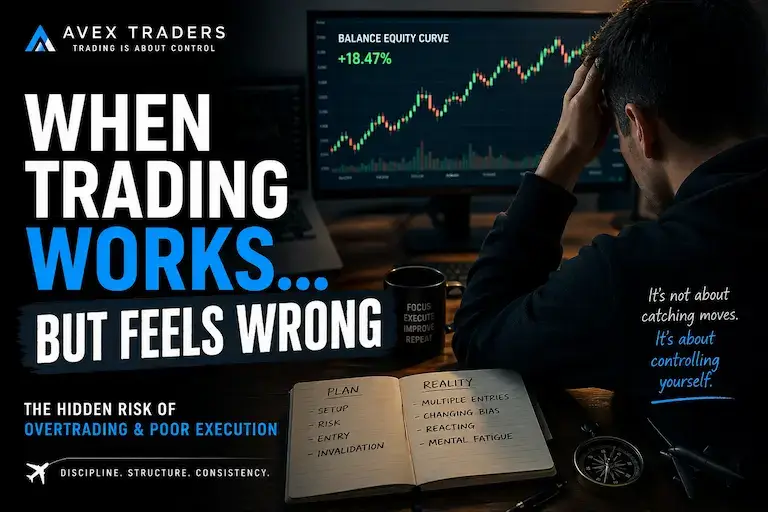
Looking at the balance curve, it looks impressive:
- strong growth
- sharp upside moves
- ending the week positive
But inside the trades, it was different.
- multiple entries
- changing bias
- reacting to price instead of following a plan
- mental fatigue building up during the session
This wasn’t clean execution.
👉 This was survival.
The Trap Most Traders Fall Into
There’s a dangerous phase in trading:
👉 when your strategy works
👉 but your execution is not controlled
That’s exactly where I was this week.
I use price action and order blocks.
When I see a setup, I enter.
If it fails, I look for the next one.
Sometimes I scale in.
Sometimes I adjust.
And eventually…
👉 one move pays for everything.
Why This Is Dangerous
Because it creates a false belief:
👉 “As long as I read the market correctly, I’ll be fine”
But the reality is different:
- overtrading increases risk exposure
- stacking positions hides real risk
- one bad streak can erase progress
These habits directly affect your risk management, even if the results look positive in the short term.
This week worked.
👉 Another week might not.
How Traders Use This in Real Trading
Most beginners focus only on strategy.
But in real trading:
👉 Execution quality + cost structure = performance
Your broker directly affects:
- entry precision
- stop-loss execution
- actual risk-to-reward (R:R)
- emotional stability
Even a good setup can fail if:
- spread is too wide
- execution is delayed
- costs eat your edge
This is where trading discipline becomes critical — especially the ability to wait for the right conditions instead of forcing trades.
The Real Problem
The issue is not strategy.
👉 It’s execution structure.
I wasn’t trading with:
- defined maximum risk per idea
- pre-planned entries
- clear invalidation
Instead, I was:
👉 reacting in real time
The Stress Factor
This is something most traders don’t talk about.
Even when profitable:
- your mind is overloaded
- you keep watching every tick
- you feel responsible for managing every move
That’s not sustainable.
The Shift I’m Making
From now on, the focus is simple:
1. One idea = one plan
- define entries before execution
- define total risk
2. No uncontrolled scaling
- maximum 2–3 entries
- fixed total exposure
3. Accept invalidation
- if the idea fails → move on
4. Reduce trading frequency
- less trades
- better trades
The Goal
Not just profitability.
👉 consistency without stress
Because making money under pressure is one thing…
But building a system that works every week
is what separates traders from professionals.
Final Thought
This week was profitable.
But more importantly, it was revealing.
It showed me exactly where I need to improve.
And that’s what this journey is about.
Avex Traders
Trading is not about catching moves. It’s about controlling yourself.